How iCivic's displayed wait times work
Un aperçu clair de la façon dont iCivic estime les temps d'attente aux services publics de l'Outaouais, et de ce que ces chiffres signifient vraiment.
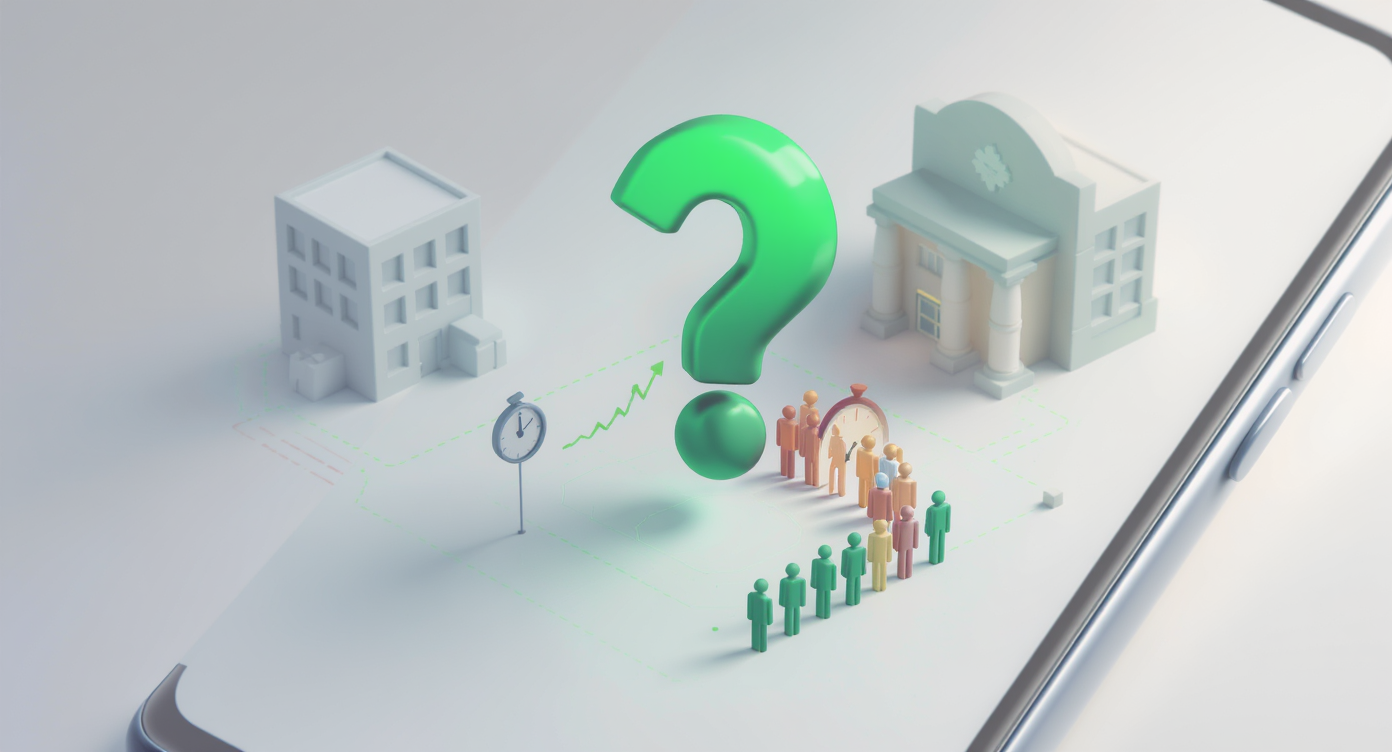
When you check iCivic before heading to an emergency room, a Service Canada office or a service counter, a number appears: the estimated wait time. But where does that number come from? How is it calculated, and above all, how should you read it to plan your visit well? Here's a transparent look at how the estimate works.
A medical emergency cannot be planned. This article covers non-urgent errands. If you have severe or sudden symptoms, call 911 or go to the nearest emergency room immediately, regardless of how busy it is. Info-Santé 811 is available around the clock.
Where the data comes from
iCivic combines two main sources of information to build an estimate that's useful to Outaouais residents.
- Available public data: when public services publish official information about crowds or delays, iCivic folds it into the estimate.
- Anonymous user reports: people who go on site can indicate, once their visit is done, how long they actually waited. These reports are anonymous and contain no location data sent to our servers.
By cross-referencing these sources, the app can reflect both a location's general trend and the recent variations observed on the ground. One important point: iCivic never replaces official information. It's a complement, designed to help you decide when and where to go.
How the number is calculated
The displayed time isn't a simple average. Several factors are weighted to make the estimate truer to the moment:
- Data freshness: a report made 20 minutes ago counts for more than one from the day before.
- Time and day: crowd habits vary a lot between a Monday morning and a Saturday night. The app accounts for these typical cycles.
- Consistency across sources: when several recent reports agree, confidence in the estimate rises. When they diverge, iCivic says so.
- Seasonality: flu season, heat waves and back-to-school naturally influence wait times at health services.
The result is shown as a range or an order of magnitude, rather than an exact minute. That's a deliberate choice: in the real world, a delay of "exactly 45 minutes" doesn't exist. What matters is knowing whether the wait will be short, moderate or long.
What the number doesn't tell you
An estimate is still an estimate. Here are a few nuances worth keeping in mind:
- An urgent case that arrives just before you can lengthen your wait, even if the display was low.
- Some services work by clinical priority rather than order of arrival. The displayed time reflects the general trend, not your exact place in line.
- Administrative counters often follow different rules (appointments, time slots, quotas) that can affect the wait independently of how many people are visibly on site.
In other words, the number is a guide, not a guarantee.
How to use the information well
To get the most out of iCivic before a trip in the Outaouais, a few simple habits help a lot:
- Check the app shortly before you leave, not the day before. Wait times change fast.
- Compare several service points when you can. A 10-minute-longer trip can sometimes save you 2 hours of waiting.
- Check opening hours and the admission criteria of the place you're aiming for.
- Contribute in turn by reporting your real wait at the end of your visit. Every report helps your neighbours plan better.
- Keep the alternatives in mind: health phone line, online booking, telehealth. iCivic mentions them when they're relevant.
An estimate in the service of citizens
iCivic's goal isn't to rank public services or to sensationalize. It's to give you, in a few seconds, a reasonable picture of the situation so you can decide with full knowledge. A better-planned visit means time saved for you and a little less pressure for the teams on site.
Next time you have to visit a public service in the region, open iCivic, glance at the estimate, and don't hesitate to contribute back. Your anonymous report makes the tool fairer for the whole Outaouais community.
Related articles
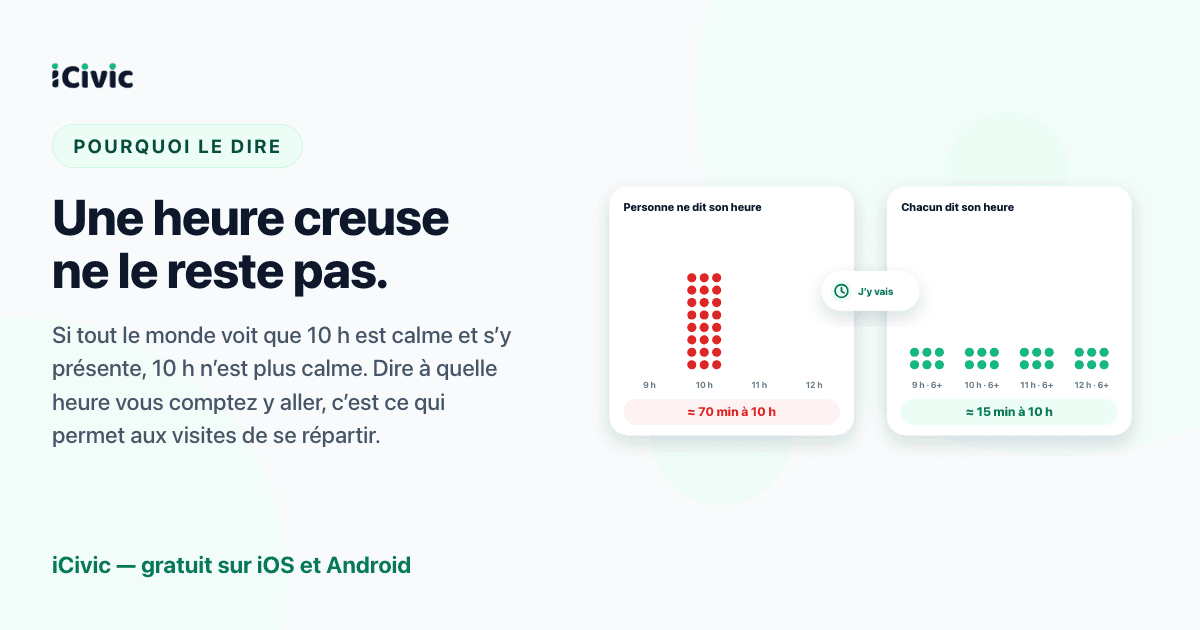
Une heure creuse ne le reste pas
Quand tout le monde vise le même moment calme, il cesse de l’être. Voici comment iCivic aide à mieux répartir les visites aux services publics de l’Outaouais.

Building a digital public service with AI from day one: what changes
Concevoir une application civique avec l'IA comme partenaire dès la première ligne de code transforme la façon dont on sert les citoyens de l'Outaouais.
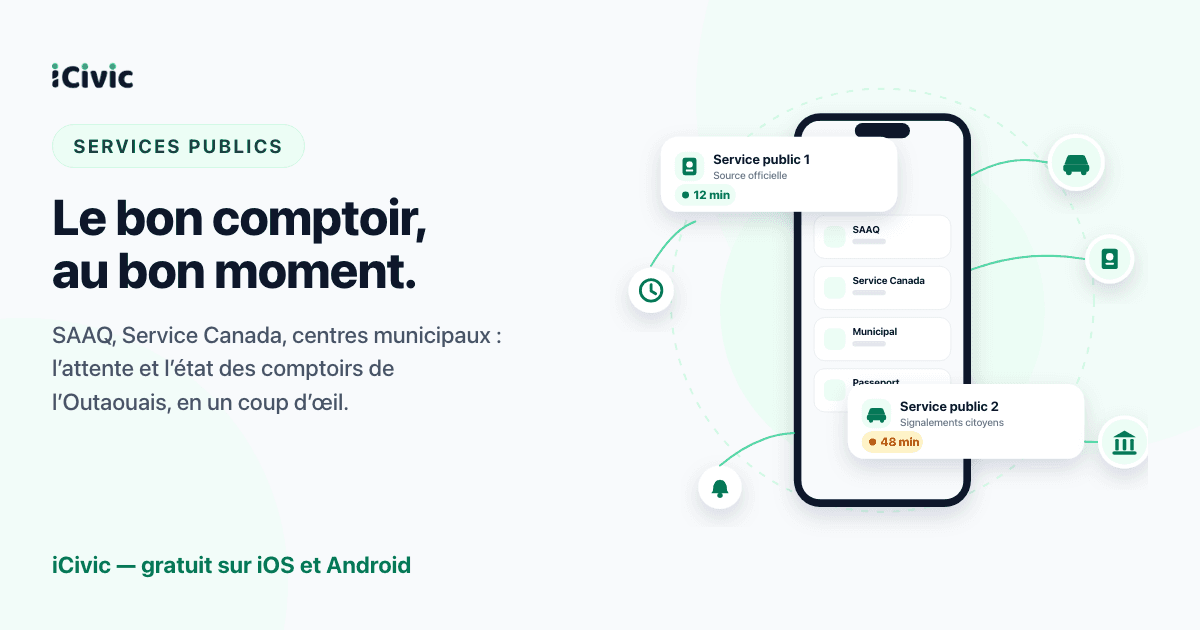
Comparer les comptoirs avec la carte iCivic avant de partir
Un aperçu pratique pour choisir le bon comptoir de service public en Outaouais avant de vous déplacer, à partir des données affichées aux 30 minutes dans iCivic.