How to avoid peak hours at public services
Un guide pratique pour choisir le meilleur moment de vous présenter à une urgence, une clinique ou un comptoir de service en Outaouais.
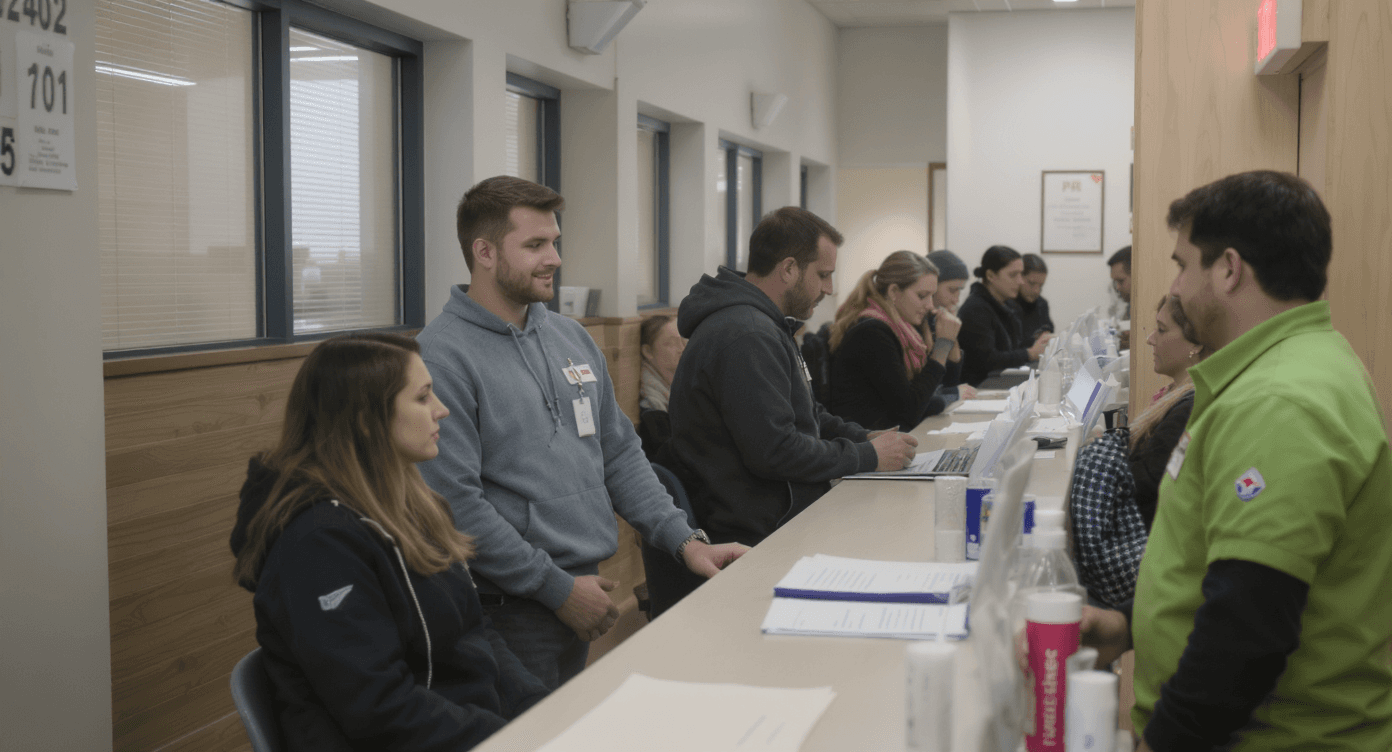
Waiting several hours in an emergency room or standing in line at a service counter wears down anyone's patience. The good news is that wait times at public services aren't random: they follow fairly predictable patterns. By understanding these cycles and planning your visit, you can often save one, two, sometimes three hours of your day.
Understanding the crowd cycles
Most public services run on recurring rhythms. The start of the week is usually busier because people let their errands pile up over the weekend. On Monday morning, at many service counters, there's a line before the doors even open. Wednesdays and Thursdays tend to be calmer, especially in the afternoon.
For emergency rooms, peaks often cluster:
- In the early evening (between 5 and 9 p.m.), when walk-in clinics close;
- On Mondays, because of problems that built up over the weekend;
- After long holiday weekends;
- During respiratory-virus season, from November to March.
Conversely, the quieter windows are often early in the morning midweek, or late in the morning for walk-in clinics.
Choosing the right time for each service
Each type of service has its own logic. Here are some useful benchmarks for the Outaouais.
For an emergency room, if your situation allows it (and only if it does), aiming for a Tuesday or Wednesday morning can cut the wait considerably. Avoid Sunday evenings and Monday mornings when you can. Remember, though, that an emergency is still an emergency: if you have any doubt about how serious it is, go without waiting for the ideal moment.
For a walk-in clinic, arrive right at opening, or look into the online booking systems offered in your area. Some clinics hit their maximum capacity less than an hour after opening.
For a government service counter, favour midweek and midday. Avoid month-ends, which are often busier because of administrative deadlines, as well as the periods before school breaks (renewing travel documents).
Preparing your visit to save time
Even with good timing, a poorly prepared visit can cost you dearly. A few simple habits make a real difference:
- Gather all your documents ahead of time (ID, completed forms, proof of residence, relevant cards);
- Check whether your task can be done online — many services now offer digital options that avoid the trip entirely;
- Note your questions or the information you want to share in advance, especially in a medical context;
- Have a plan B in case the service is overloaded (another branch, a phone appointment, coming back another day).
These small steps reduce the time you spend at the counter once your turn comes, and save you from having to come back a second time because of a missing document.
A medical emergency cannot be planned. The advice in this article covers non-urgent errands. If you have severe or sudden symptoms, call 911 or go to the nearest emergency room immediately, regardless of how busy it is. Info-Santé 811 is available around the clock.
Using the most recent data
General patterns are useful, but they don't replace up-to-the-minute information. An emergency room that's usually calm on Tuesday morning can be unusually swamped because of a local event. A normally fast service counter can slow down because of a computer outage.
That's exactly where a tool like iCivic becomes useful. By checking the wait times reported by other Outaouais residents before you leave home, you make an informed decision: go now, wait a few hours, or pick another service point. Reports are anonymous and come straight from people living the experience on the ground.
In short
Avoiding peak hours rests on three simple principles: know the cycles, prepare your visit, and check the real state of the service just before you leave. These habits don't guarantee a zero wait, but they clearly improve your odds of a better day.
Before your next visit to a public service in Gatineau or elsewhere in the Outaouais, take thirty seconds to check iCivic. You'll see at a glance where the wait is reasonable and where it isn't — and you, in turn, help your neighbours by sharing your own experience.
Related articles
Comparer les comptoirs avec la carte iCivic avant de partir
Un aperçu pratique pour choisir le bon comptoir de service public en Outaouais avant de vous déplacer, à partir des données affichées aux 30 minutes dans iCivic.

Why checking the wait before you go helps everyone
Un simple coup d'œil aux temps d'attente avant de sortir de chez vous améliore votre journée, mais aussi celle de toute votre communauté.

Understanding public-service crowds in the Outaouais
Pourquoi les files varient d'une heure à l'autre, et comment ces variations peuvent vous aider à mieux planifier vos démarches dans la région.